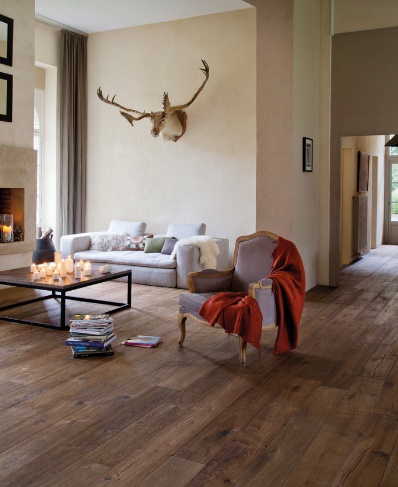
Parquet flooring is a modern alternative to expensive solid wood floors. It has the same unique texture and color of natural wood, but it is more resistant to wear and more affordable.
Due to its environmental friendliness and durability, this material can be used in any premises — apartments, country houses, office and administrative centers, gyms.Let's tell you how to choose the right parquet board.
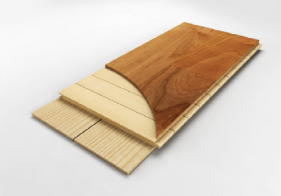
The composition of the material
The planks of the parquet board are a three-layer glued structure.The bottom layer is made of spruce or birch veneer with a thickness of 2 mm. It stabilizes the board and prevents it from bending, while maintaining a flat horizontal plane. It is important that the bottom of the bar is solid, and not glued together from several pieces.
The middle is most often made from solid blocks of inexpensive wood, mainly pine, or HDF-board.
The bars are laid with a gap so that their fibers are located perpendicular to the fibers of the upper layer. This compensates for the stress in the board and the deformation of the wood when the humidity in the room changes.An HDF slab made of pressure-pressed wood fibers has a density of at least 900 kg per m3. The material is characterized by high impact resistance, good noise insulation and thermal conductivity, as well as high stability to temperature and humidity changes. Most of the collections of our brand BerryAlloc use an HDF plate.
Lock joints are cut precisely in the middle layer.
The top layer is valuable wood, usually 1 mm thick. In the collections of our brand BerryAlloc, it is 2.5–3.5 mm, which ensures a long service life and the possibility of several sanding operations to update the appearance (with the adhesive method).
Characteristics of the parquet board
When choosing a coating, a number of characteristics should be taken into account. The main one is the type of breeding, or, more simply, the appearance of your future sex. There are three types of breeding:
- select — light, monophonic wood, knots no more than 10 mm in diameter, without sapwood (the youngest layer of wood);
- natural wood of different shades, knots no more than 25 mm in diameter, without sapwood;
- country wood is contrasting, knots up to 40 mm in diameter, sapwood is acceptable.
Additional features:
- type of locking connection;
- the size of the slats;
- type of slats — multi-lane or single-lane;
- processing method and type of protective layer;
- the presence of additional processing — brushing, aging, the effect of manual plane treatment, sawn oak;
- the presence of a chamfer.
Wood selection
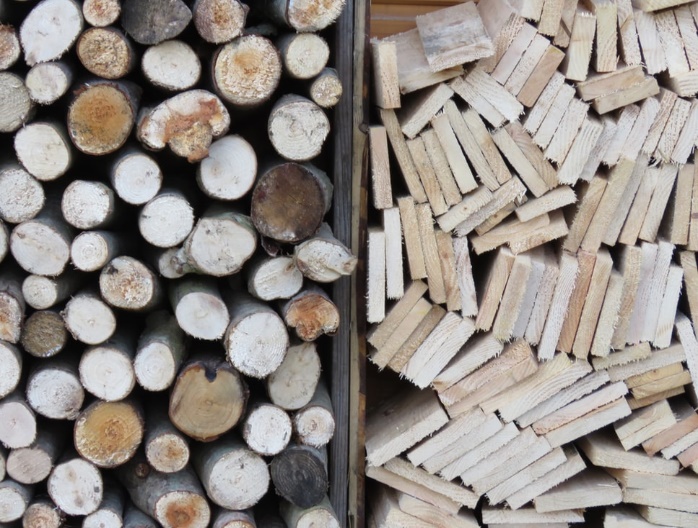
The modern variety of valuable rocks allows you to choose a coating for every taste. Oak, ash, American walnut, beech, maple, birch, cherry, merbau, yatoba, wenge and many others are used in the production of parquet boards.
Oak is used in most of our collections, as it produces some of the most durable floor coverings. The wood of this tree is characterized by a dense structure that is resistant to mechanical influences. It tolerates significant changes in humidity well and is not prone to cracking.
Oak parquet board is guaranteed to last at least 15 years with minimal maintenance. However, it requires humidity control.
The Council: To track humidity, purchase a hygrometer. If the readings start to exceed 40-45%, ventilate the room. In winter, when the central heating is running, the humidity level can drop to 20%, in which case you should use an air humidifier.
Connection methods
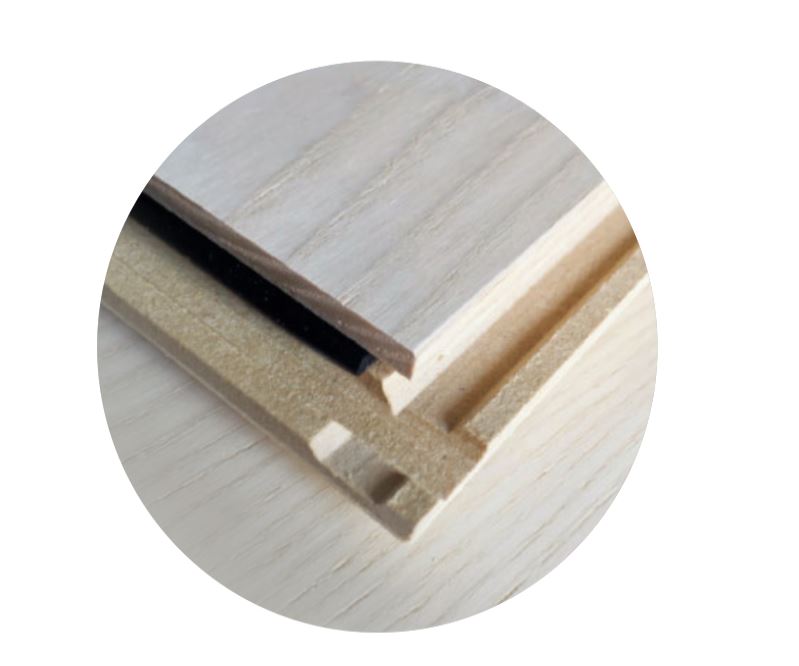
Despite the fact that almost every manufacturer of floor coverings develops and patents their own connection systems, all locks are divided into three main types — spike-groove, Click and 5G.
Spike-groove. At this connection, the spike and groove are located parallel to the main plane of the board. When assembling the floor, tongue-and-groove glue is used, which is applied in a solid line to the end and every 50 mm to the longitudinal side into the groove. After that, the slats are pressed against each other in a horizontal plane and knocked down with a mallet. This method of laying requires certain skills and experience, otherwise it is highly likely to damage the coating.
Click. Locks of this type have different mounting mechanics. A bar with a protrusion is applied at an angle to a horizontally lying bar with a groove and lowered until it clicks. It turns out to be a more durable joint than a spike-groove, it can be repeatedly disassembled and assembled.
5G. The most modern version of connecting the slats. It uses a lock with a plastic insert on the end side, which ensures the assembly of the parquet on one board. Moreover, the assembly can be done both in a floating way (like laminate) and with fixation to the base. The tensile strength of the 5G joint prevents the formation of cracks and reaches 1000 kg/pm, so this lock is more stable during operation.
The Council: Professionals recommend laying on glue, which provides a rigid fixation to the base. This allows you to achieve maximum stability to changes in temperature and humidity in the room, better sound insulation and thermal conductivity.
Size
The first important dimension parameter is the thickness of the strip. For residential premises, a material with a thickness of at least 13-14 mm is needed. In this case, the decorative layer will be from 2.5 to 4 mm, which will allow for the restoration of the floor several times in the future. For public places, it is worth taking a board with a thickness of more than 14 mm. It better tolerates increased stress on wear and abrasion.
The second important parameter is the length. The simple principle of "the longer, the better" works here. Long slats redistribute the load better, preserve the integrity of the floor longer, and creak less frequently over time.
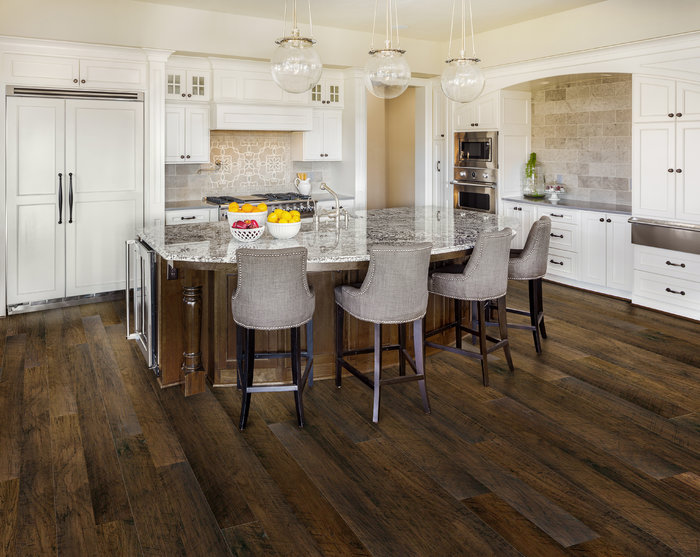
Single-lane
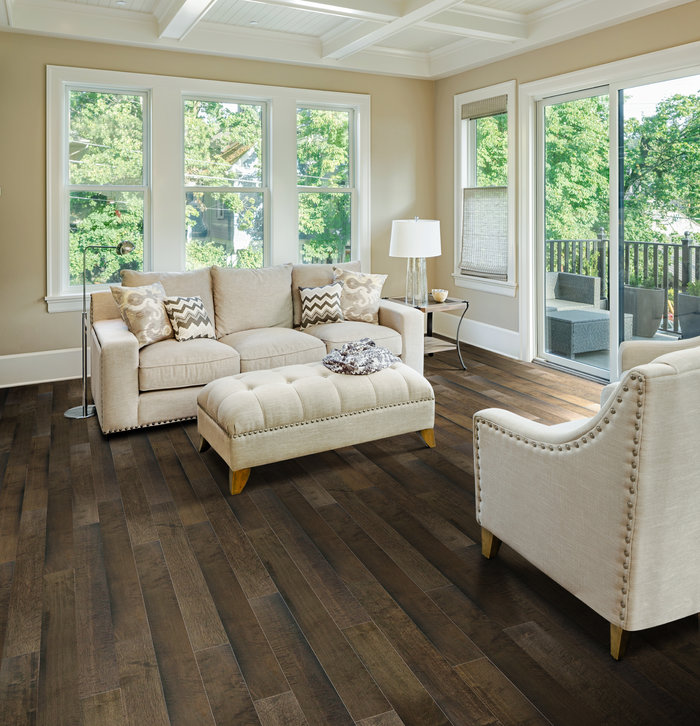
Three- lane
What is the difference between single-lane and multi-lane parquet
For a single-strip strip, the upper decorative layer is a single whole. Due to this, the texture and color of the wood is revealed from the best side. The floors covered with single-strip material are not inferior in appearance to natural parquet.
In a multi-band board, the top layer consists of several slats — two, three, and even four. At the same time, the lamellas, as a rule, are displaced relative to each other in order to plausibly imitate a set parquet in the interior.In terms of quality and performance, single-lane and multi-lane parquet strips are no different. The only difference lies in the appearance and, accordingly, the price of the material — on average, a single-strip board is 50-70% more expensive than a three-strip board made of the same wood.
Protective coatings
Parquet is covered with a protective layer immediately in production, and this compares favorably with parquet, which has to be processed after installation directly in an apartment or house.
Varnish
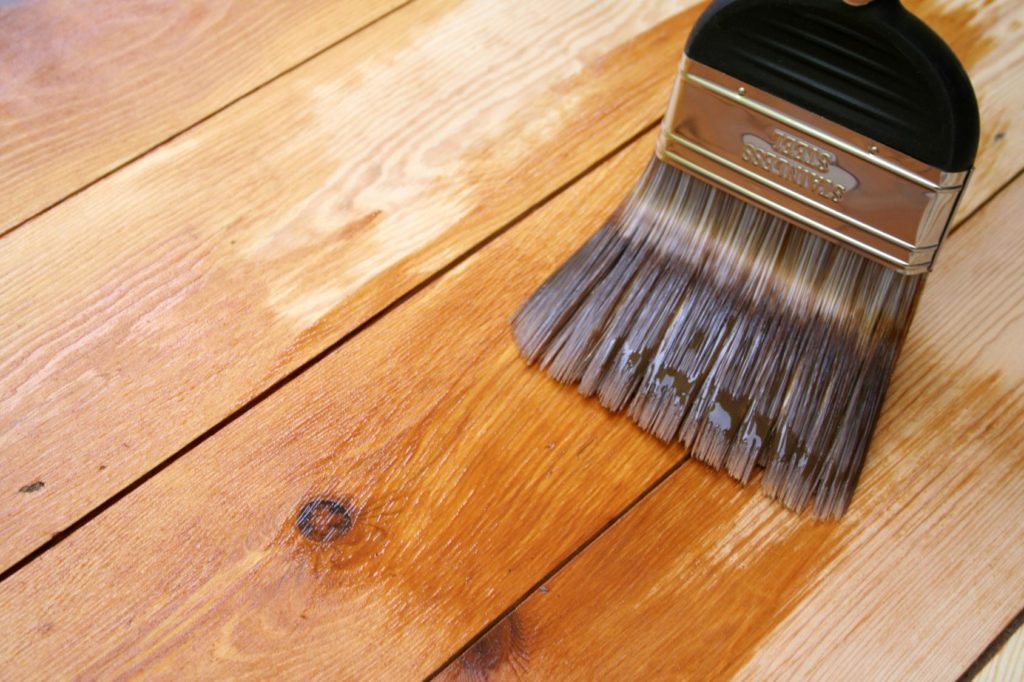
The varnish coating is highly resistant to wear and requires restoration no more than once every 6-10 years.
The varnish protects the board well from contamination and fading, therefore it is suitable for light shades of wood.Glossy and matt varnishes are available to choose from. But we must remember that scratches are more noticeable on the glossy surface.
If desired, the varnished parquet plank can be sanded and coated with oil. This process is not available for oil-treated boards.
Natural oil
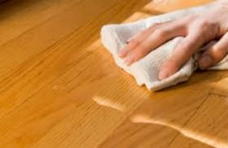
The parquet board, covered with oil, looks more natural and tolerates temperature and humidity changes in the room better.
Oiled wood allows for local repairs, while varnished slats only need to be sanded entirely.
The service life of the oil is shorter than that of the varnish — restoration will be required every 3-5 years. And it is less resistant to contamination, it is recommended to walk on such a surface only in soft home shoes or barefoot.